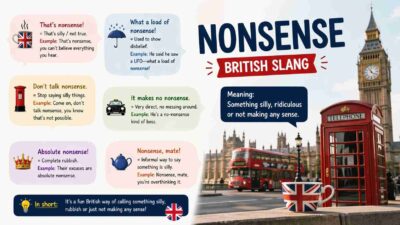
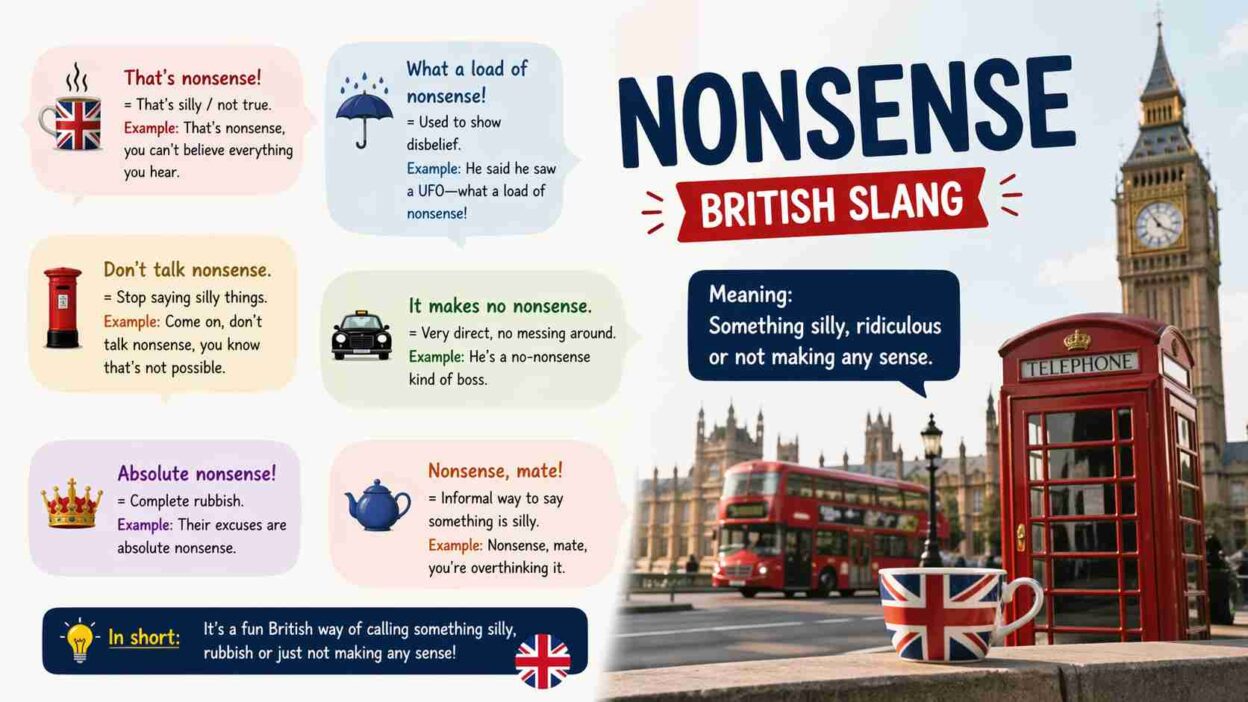
Quick Answer: Nonsense means something silly, untrue, or not making sense. It is a casual and often dismissive way of saying something is wrong or ridiculous.
You might hear someone in the UK say “that’s nonsense” and wonder what they really mean. At first, it sounds simple, but in British slang, this word can carry different tones depending on how it is used. Sometimes it is playful, sometimes dismissive, and sometimes even a bit sarcastic. If you are chatting with British friends or watching UK shows, understanding this word can help you catch the real vibe of the conversation.
What Does Nonsense Mean in British Slang?
In British slang, nonsense is used to reject an idea, statement, or excuse. It can mean something is false, silly, exaggerated, or not believable.
It is very flexible and depends on tone. A calm tone can sound polite, while a sharp tone can sound rude or dismissive.
Example sentence:
“That’s absolute nonsense, I don’t believe you.”
In short:
Nonsense = silly or untrue = not worth believing
Where Is “Nonsense” Commonly Used?
You will hear nonsense used in many everyday British situations:
- 📱 Text messages
- 🎬 British TV shows and movies
- ☕ Casual conversations
- 🏫 School or workplace chats
- 🐦 Social media posts
Tone:
- Casual
- Sometimes sarcastic
- Can be polite or rude depending on delivery
Examples of Nonsense in Conversation
Here are realistic examples in texting style:
A: i finished all my work in 5 minutes
B: nonsense 😂
A: he said he saw a ghost
B: that’s nonsense
A: i didn’t eat your snacks
B: nonsense, they’re gone 😄
A: i never make mistakes
B: absolute nonsense
A: i can run 100 miles today
B: yeah right, nonsense 😅
When to Use and When Not to Use “Nonsense”
When to Use
✅ Calling out something silly or false
✅ Friendly teasing with friends
✅ Reacting to exaggeration
✅ Light sarcasm
When Not to Use
❌ Formal conversations
❌ Professional emails
❌ Serious arguments
❌ Talking to elders or authority in a rude tone
Usage Comparison Table
| Context | Example Phrase | Why It Works |
|---|---|---|
| Friend Chat | “that’s nonsense 😂” | Casual and playful |
| Debate | “that argument is nonsense” | Strong disagreement |
| Work Chat | “I don’t think that’s correct” | More professional |
| “This information seems inaccurate” | Formal tone |
Similar Slang Words or Alternatives
| Slang | Meaning | When to Use |
|---|---|---|
| Rubbish | Completely wrong | British casual |
| Bollocks | Stronger version of nonsense | Informal only |
| Crap | Something bad or false | Casual tone |
| BS | Short for nonsense | Texting |
| Silly | Light and polite | Friendly chats |
FAQs
What does nonsense mean in British slang?
It means something untrue, silly, or not believable.
Is nonsense rude?
It can be, depending on tone. It may sound playful or dismissive.
Do British people use nonsense often?
Yes, it is very common in everyday speech.
Is nonsense formal or informal?
It is mostly informal and used in casual conversations.
What is stronger than nonsense in British slang?
Words like “rubbish” or “bollocks” can sound stronger.
Conclusion
In British slang, nonsense is a simple but powerful word used to reject ideas, stories, or excuses. Whether it is said jokingly or seriously, it usually means something does not make sense or is not believable. Understanding the tone is key because the same word can feel friendly or harsh depending on how it is used. Once you get the hang of it, you will start noticing it everywhere in British conversations.