The word “sustained” may sound simple, yet in court it carries serious legal weight. It controls what information the jury is allowed to hear and what must be ignored.
A single ruling can protect a defendant, limit a lawyer’s strategy, or prevent unfair influence on the jury.
Understanding what “sustained” means helps you follow trials, legal news, and courtroom shows with clarity.
What Does Sustained Mean in Court?
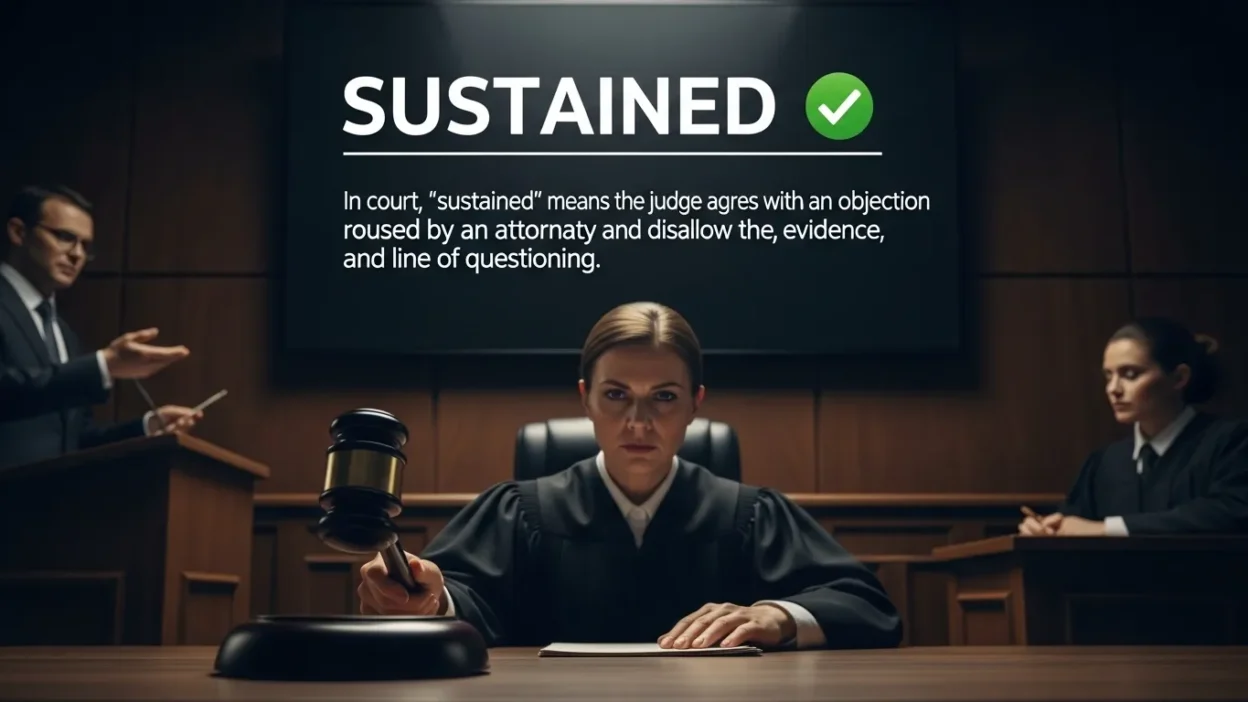
In legal language, “sustained” means the judge has accepted an objection raised by a lawyer.
When the judge says “sustained,” it means:
The objection is valid
The question or statement is not allowed
The witness must not answer
The jury may be told to ignore what was said
In simple words:
Sustained means the judge agrees and blocks it.
This ruling does not mean the objecting lawyer is winning the case. It only means that a specific question or piece of information is not permitted under court rules.
How Objections Work in Court
Every courtroom follows strict rules to ensure fairness. Objections are how lawyers enforce those rules.
The process usually works like this:
One lawyer asks a question
The other lawyer says “Objection”
The judge decides
There are only two outcomes.
| Judge’s Ruling | Meaning | What Happens |
|---|---|---|
| Sustained | Objection accepted | The question or evidence is blocked |
| Overruled | Objection denied | The question continues |
Real Courtroom Examples
Example 1
Defense Attorney: “Objection, relevance.”
Judge: “Sustained.”
The witness cannot answer, and the jury should not consider it.
Example 2
Lawyer: “What did your neighbor tell you about the accident?”
Defense Attorney: “Objection, hearsay.”
Judge: “Sustained.”
Common Reasons Judges Sustain Objections
Hearsay
The witness is repeating what someone else said
Relevance
The question does not connect to the case
Leading
The lawyer suggests the answer
Improper evidence
The material violates court rules
These rules exist to prevent confusion, bias, and unfair influence.
Meaning Table
| Term | Court Meaning | Simple Explanation |
|---|---|---|
| Sustained | Judge agrees with objection | The question is blocked |
| Objection | Legal challenge | A lawyer says something is wrong |
| Overruled | Judge disagrees | The question continues |
| Hearsay | Second hand statement | Someone else said it |
| Relevance | Connection to case | It must matter |
| Leading | Suggests an answer | Pushes the witness |
Why “Sustained” Matters
The word “sustained” protects:
Fair trials
Accurate testimony
Legal procedure
Jury neutrality
Without this control, trials could include rumors, emotional manipulation, or unfair accusations. Judges use sustained rulings to ensure that only lawful and reliable information shapes the case.
What Happens After “Sustained”
When a judge says “sustained”:
The lawyer must stop that question
The witness does not answer
The judge may tell the jury to ignore it
The lawyer must rephrase or move on
Conclusion
In court, “sustained” means the judge agrees with an objection and blocks a question, statement, or piece of evidence. It is not about drama or victory.
Every time a judge says “sustained,” the court is ensuring that only proper, lawful information reaches the jury. Understanding this term allows you to follow trials, legal news, and courtroom shows with confidence. It is a small word with powerful impact in the justice system.
See Also More :
- What Does a Data Scientist Do? Roles, Skills, and Career Path
- What Does No Kings Protest Mean? Explanation, History, and Context