You’re reading a chat, everything seems normal, and then someone replies with just three letters: smh. No emojis. No extra words. Just “smh.” Suddenly, the tone feels different. Did they get annoyed? Are they disappointed? Are they judging you?
That’s the power of this tiny slang. It carries emotion without needing a full sentence. Many people first see “SMH” in comments, memes, or group chats and feel confused. It doesn’t look like a real word, yet everyone seems to understand it. Once you learn what it stands for and how it’s used, you’ll start noticing it everywhere.
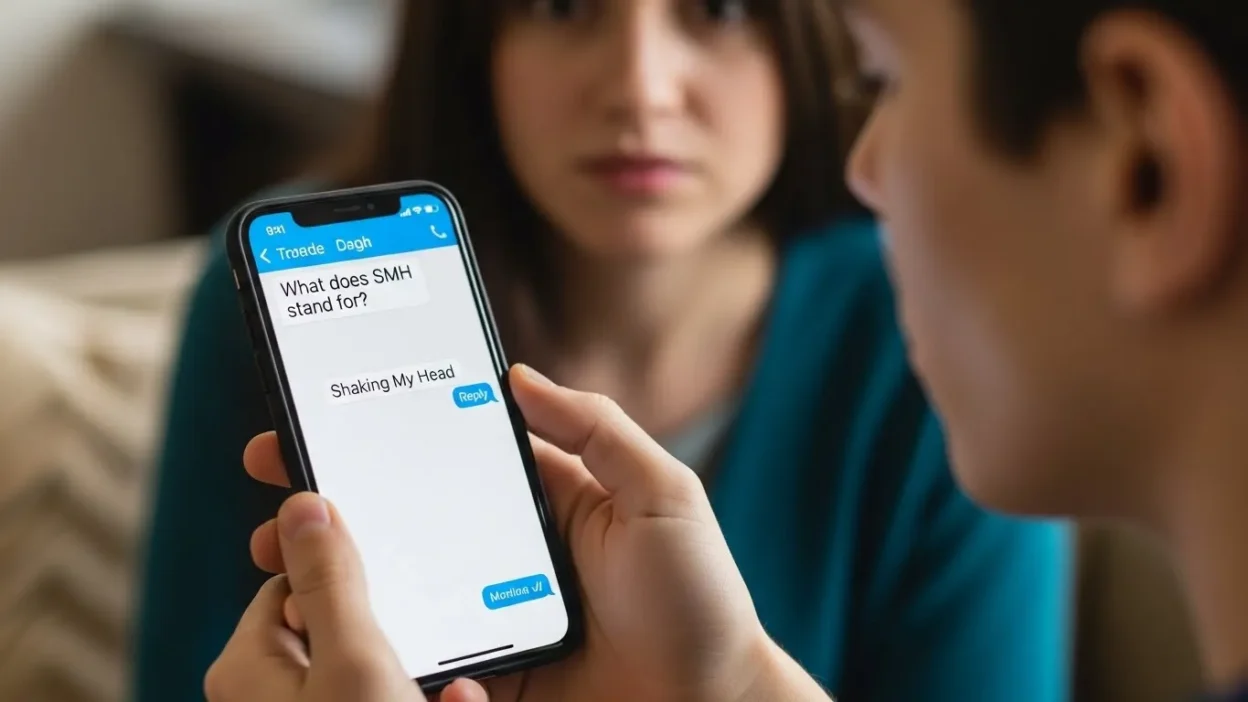
SMH stands for “Shaking My Head.” It’s a casual expression used to show disappointment, disbelief, frustration, or mild embarrassment about something.
🧠 What Does SMH Mean in Text?
SMH literally stands for “Shaking My Head.” It describes the physical action people make when something is confusing, silly, or disappointing.
In texting, it’s not about actually shaking your head. It’s about expressing a feeling. When someone types “smh,” they’re saying:
I can’t believe this
That’s disappointing
That makes no sense
You should know better
Example:
“you forgot your keys again? smh”
This doesn’t mean anger. It usually carries a mix of disbelief and light frustration.
In short:
SMH = Shaking My Head = Expressing disappointment or disbelief.
📱 Where Is SMH Commonly Used?
You’ll see SMH in:
Text messages
Group chats
Snapchat conversations
TikTok comments
Instagram replies
Twitter posts
Gaming chats
Work emails
School essays
Professional communication
Formal writing
SMH is meant for everyday digital talk.
💬 Examples of SMH in Conversation
A: i stayed up all night and forgot the exam was today
B: smh
A: i sent the wrong screenshot to the group chat
B: smh bro 😭
A: he really thought 2+2 was 5
B: smh
A: i spent my whole paycheck in one day
B: smh you wild
A: my phone died right before the call
B: smh that timing
A: i wore slippers to school
B: smh 😂
These examples show how SMH reacts to mistakes, surprises, or silly moments.
🕓 When to Use and When Not to Use SMH
When to Use
With friends
In casual chats
Reacting to mistakes
Responding to silly situations
In memes and comments
When Not to Use
Talking to teachers
Work messages
Serious emotional moments
Formal writing
Professional conversations
Using SMH in serious or professional settings can seem disrespectful or immature.
Context Example Phrase Why It Works
Friend Chat “smh you forgot again” Playful and casual
Group Chat “smh 😂” Light reaction
Work Chat “This is disappointing.” Clear and professional
Email “I am concerned about this.” Polite and formal
🔄 Similar Slang Words or Alternatives
Slang Meaning When to Use
Facepalm Embarrassment or disbelief Memes and chats
Bruh Disbelief or shock Casual talk
Wow Surprise or disbelief Neutral reaction
Sigh Tired or disappointed tone Relaxed chats
Yikes Awkward surprise Social media
Each of these expresses emotion, but SMH specifically carries disappointment mixed with disbelief.
🌟 Why SMH Is So Popular
SMH is popular because it saves time and emotion. Instead of typing, “I can’t believe you did that,” people just write “smh.” It feels lighter, faster, and more expressive.
It also works in many situations:
Funny mistakes
Bad decisions
Surprising news
Disappointing moments
Awkward situations
Three letters can say a whole sentence. That’s why it spread so quickly across social media and texting.
❓ FAQs
What does SMH mean in texting?
SMH means “Shaking My Head.” It shows disappointment or disbelief.
Is SMH rude?
It can feel rude if used harshly, but among friends it’s usually playful.
Can SMH be funny?
Yes. Many people use SMH humorously after silly mistakes.
Do people actually shake their heads?
Not always. It’s symbolic in text, not literal.
Is SMH still popular?
Yes. It’s still widely used across social media and messaging apps.
Can I use SMH with adults?
Only in casual conversations. Avoid using it in professional or formal settings.
🏁 Conclusion
SMH stands for “Shaking My Head,” and it’s used to show disappointment, disbelief, or mild frustration. It’s not usually harsh or angry. Most of the time, it’s playful and expressive, especially among friends.
You’ll see it in texts, comments, and memes whenever something feels silly or disappointing. While it fits perfectly in casual chats, it doesn’t belong in formal communication. Once you understand its tone, SMH becomes an easy and natural part of modern texting.