
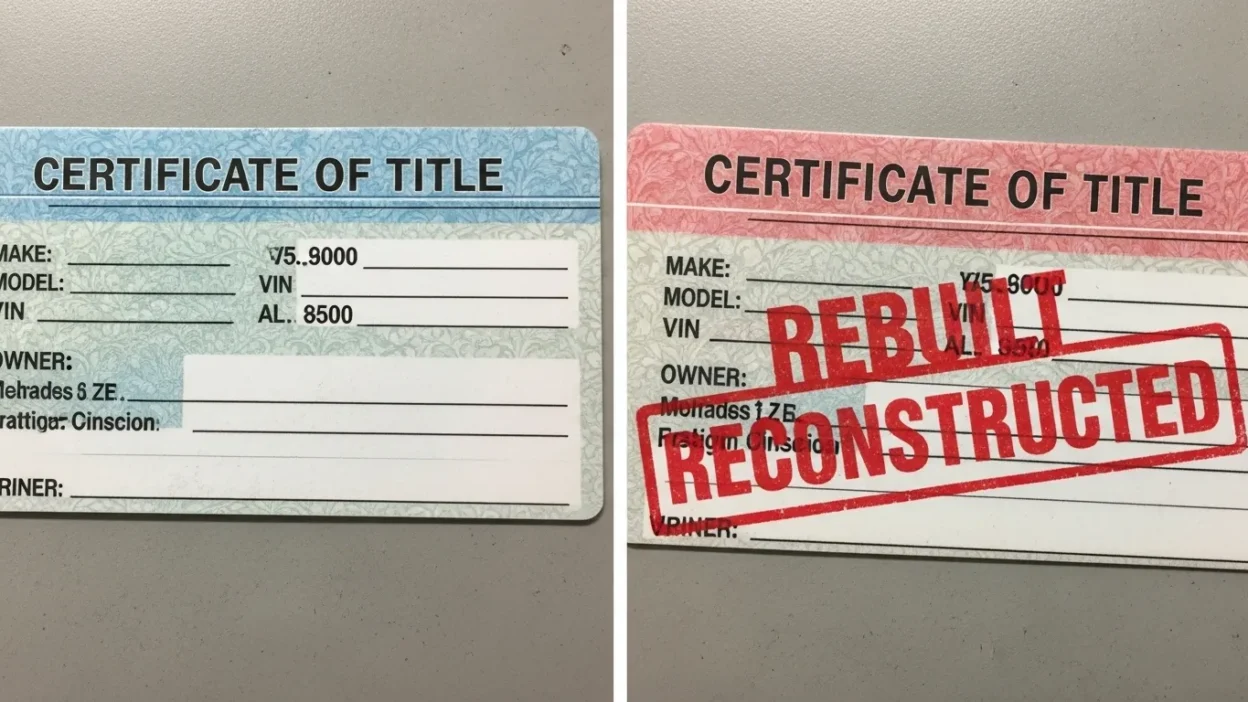
Imagine you’re scrolling through car listings, excited to find a good deal. Everything looks perfect until you notice one small phrase in the details: rebuilt title. Suddenly, doubt kicks in.
Many people see “rebuilt title” for the first time and feel confused. It sounds serious, and in a way, it is. This label tells a story about the car’s past.
Understanding this term can save you from costly mistakes. It helps you decide whether a cheaper price is a smart opportunity or a risky gamble. Knowing what “rebuilt title” means puts you in control when shopping for a used car.
What Is a Rebuilt Title
A rebuilt title is issued after a vehicle has been declared a total loss and later repaired. When a car is badly damaged in an accident, flood, fire, or other incident, the insurance company may decide it costs more to fix than it is worth. At that point, the car receives a salvage title.
If someone repairs that car and passes state inspections, the title changes from salvage to rebuilt. This means the car is now road-legal again, but its history remains visible forever.
In short
Rebuilt title = Previously totaled car that has been fixed and approved for driving.
Cars receive rebuilt titles for several reasons:
- Major accident damage
- Flood or water exposure
- Fire damage
- Theft recovery with heavy damage
- Structural frame issues
These vehicles were once unsafe or uneconomical to repair. After repairs, they return to the road under the rebuilt status.
How Rebuilt Titles Affect Car Value
Cars with rebuilt titles are cheaper than clean-title vehicles. On average, they sell for 20 to 40 percent less.
This lower price exists because:
- Buyers worry about hidden damage
- Insurance can be harder to get
- Financing may be limited
For some buyers, this discount is appealing. For others, the risk outweighs the savings.
Is a Rebuilt Title Car Safe
Safety depends on the quality of repairs.
A rebuilt title does not automatically mean the car is unsafe. It only means it was once heavily damaged. What matters now is:
- Who repaired it
- How well it passed inspection
Pros and Cons of Buying a Rebuilt Title Car
| Pros | Cons |
|---|---|
| Lower purchase price | Lower resale value |
| Affordable newer models | Harder to insure |
| Good for short-term use | Potential hidden issues |
| Budget-friendly option | Financing limitations |
This balance is why some buyers love rebuilt cars while others avoid them.
When a Rebuilt Title Makes Sense
A rebuilt title can be a smart choice if:
- You plan to keep the car long-term
- You get a detailed inspection
- The price difference is significant
- You understand the risk
It is less ideal for those who resell often or need easy financing.
FAQs
Is a rebuilt title the same as a salvage title
No. A salvage title means the car is not road-legal.
Can you insure a rebuilt title car
Yes, but some insurance companies only offer basic coverage.
Does a rebuilt title affect resale value
Yes. Rebuilt title cars are worth less than clean-title cars and may take longer to sell.
Conclusion
A rebuilt title means a car was once declared a total loss but later repaired and approved for use again. It tells buyers that the vehicle has a past involving serious damage. While rebuilt cars are often cheaper, they come with added risk and reduced value.
For some people, a rebuilt title is a budget-friendly way to own a newer vehicle. For others, the uncertainty is not worth the savings. Understanding this label helps you make informed decisions and avoid surprises.
See Also More :
- What Does Smut Mean? Meaning, Usage, and Online Context Explained 2026
- What Does Strep Throat Feel Like? Symptoms and Real Experience Explained 2026