
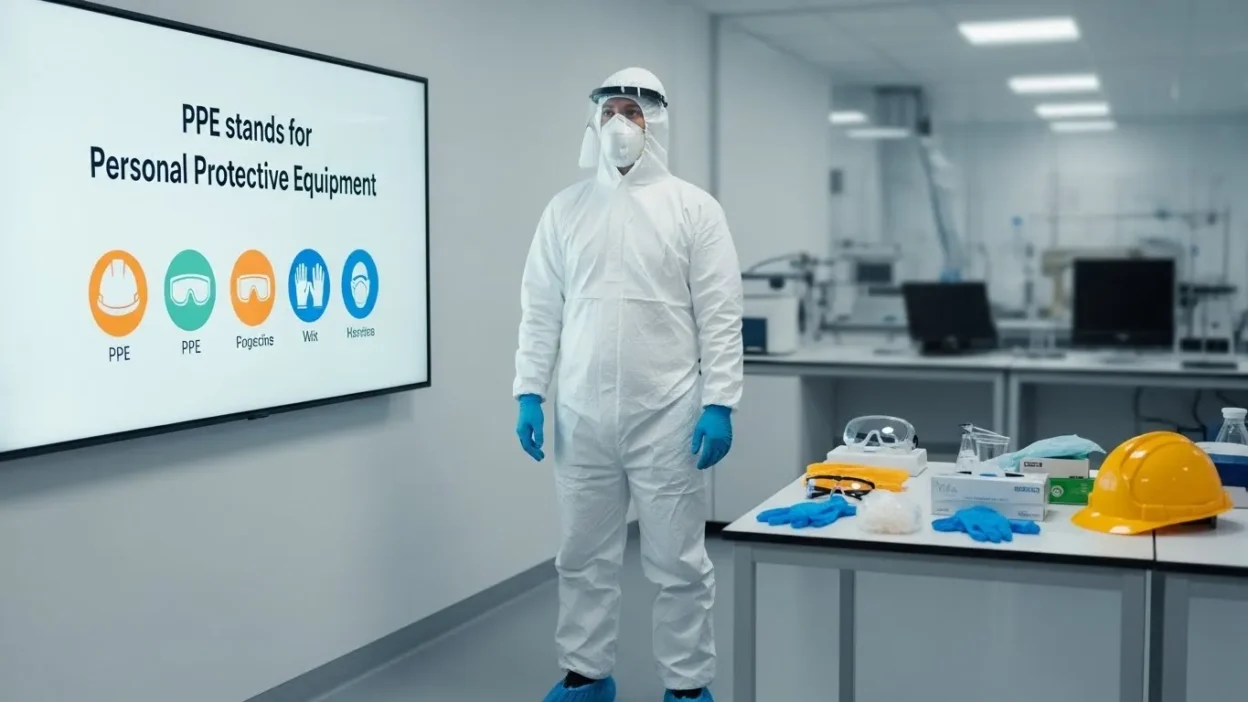
Have you ever walked into a hospital, construction site, or laboratory and noticed people wearing gloves, masks, helmets, or goggles? Or perhaps you’ve seen warning signs labeled PPE and wondered what it meant. PPE might look like just another acronym at first, but it plays a critical role in protecting people from a wide variety of hazards. From healthcare professionals during a pandemic to construction workers handling heavy machinery, PPE is essential for safety in both professional and personal environments.
PPE isn’t just for workers—it’s for anyone who faces potential danger, whether from chemicals, physical impact, or infectious agents. Understanding what PPE stands for, the types of equipment it includes, and how it works can save lives, prevent injuries, and improve confidence when performing risky tasks. This guide will explain everything you need to know about PPE, its uses, and its importance for everyday safety.
Quick Answer:
PPE stands for Personal Protective Equipment. It is clothing, gear, or tools designed to protect individuals from physical, chemical, biological, or environmental hazards.
🧠 Meaning of PPE
PPE refers to any equipment worn by an individual to reduce exposure to hazards that could cause injury or illness. This includes gear that acts as a barrier between the person and potential dangers.
In simpler terms:
PPE = Personal Protective Equipment = Gear that protects your body from harm.
Meaning Table
| Term | Meaning | Simple Explanation |
|---|---|---|
| PPE | Personal Protective Equipment | Safety gear worn to protect the body |
| Personal | For the individual | Each person must wear their own equipment |
| Protective | Prevents harm | Shields you from hazards |
| Equipment | Gear or tools | Items you wear or use for safety |
| Hazard | Potential danger | Can be physical, chemical, biological, or environmental |
🛡️ Types of PPE
PPE comes in many forms depending on the hazards present. Key types include:
- Gloves: Protect hands from chemicals, germs, sharp objects, and heat
- Masks & Respirators: Protect lungs from dust, smoke, harmful fumes, and infectious agents
- Helmets & Hard Hats: Protect the head from falling objects or impact
- Goggles & Face Shields: Protect eyes and face from chemicals, debris, or infectious droplets
- Safety Shoes & Boots: Protect feet from crushing, punctures, or chemical exposure
- Gowns & Aprons: Protect clothing and skin from spills, chemicals, or biological agents
- Earplugs & Earmuffs: Protect hearing in noisy environments
- High-Visibility Clothing: Makes workers visible in low-light or hazardous areas
Using the correct type of PPE for specific tasks ensures maximum protection.
🏥 Where PPE Is Commonly Used
PPE is used in numerous workplaces and daily activities:
- Healthcare settings: Hospitals, clinics, labs
- Construction sites: Handling heavy machinery and tools
- Industrial workplaces: Factories, chemical plants, warehouses
- Fire and rescue services: Protecting from heat, smoke, and hazardous materials
- Cleaning and sanitation: Handling chemicals and biohazards
- Schools and laboratories: During experiments or practical activities
- Home environments: DIY, gardening, cleaning, or minor construction projects
Even simple protective gear like helmets for cycling or gloves for gardening are considered PPE because they protect against potential harm.
💬 Real-Life Examples
- “Why do I need gloves for this task?”
“It’s PPE. They protect your hands from chemicals.” - “I feel safer wearing a mask at the hospital.”
“That’s part of your PPE to protect against germs.” - “Don’t forget your helmet on the construction site.”
“Yes, it’s PPE. It protects me from falling objects.” - “These goggles feel uncomfortable.”
“They’re PPE. They protect your eyes from debris.”
These examples show PPE in action, both professionally and personally.
⚙️ Importance of PPE
PPE is crucial because it reduces the risk of injuries and illnesses. Even when other safety measures are in place, PPE serves as a last line of defense.
Without PPE:
- Cuts, burns, and eye injuries are more likely
- Exposure to chemicals, germs, or dust increases
- Hearing damage or respiratory problems may occur
- Work accidents may become more severe
With PPE:
- Risk of injury decreases significantly
- Exposure to harmful substances is minimized
- Work and daily activities become safer
- Confidence in performing tasks increases
It also encourages a culture of safety, reminding people that hazards exist and protection is necessary.
🔄 Extra Insights: PPE Beyond the Workplace
PPE isn’t just for professionals. Everyday examples include:
- Gloves for cleaning or handling chemicals
- Masks in dusty or polluted environments
- Helmets while cycling or motorbiking
- Goggles for DIY woodworking or home repairs
- Sunscreen or UV-blocking clothing for skin protection
These forms of PPE show its relevance beyond workplaces, helping individuals stay safe daily.
🧭 Choosing the Right PPE
Selecting PPE requires understanding the hazard and picking the correct equipment:
- Identify the hazard before selecting PPE
- Ensure proper fit and comfort
- Check for quality and safety certifications (e.g., OSHA, ANSI)
- Follow manufacturer instructions for use and cleaning
- Replace worn or damaged equipment immediately
- Combine PPE with other safety measures for maximum protection
Correct usage is as important as having PPE. Improper use can reduce effectiveness significantly.
🛠️ Maintaining and Storing PPE
Proper maintenance ensures PPE functions correctly:
- Store in a clean, dry area
- Clean and disinfect regularly
- Inspect before each use
- Replace worn or expired items
- Train staff and family members on proper usage
Well-maintained PPE lasts longer and consistently protects you from hazards.
🏁 Conclusion
PPE stands for Personal Protective Equipment, and its purpose is simple: to protect you. It includes items like gloves, masks, helmets, goggles, and safety shoes that act as a barrier between your body and danger.
From hospitals to homes, PPE plays a vital role in preventing injuries and illnesses. It is not about fear; it is about preparedness.
Understanding what PPE means helps you recognize its value and use it correctly. In many situations, this simple equipment is the difference between safety and harm.