
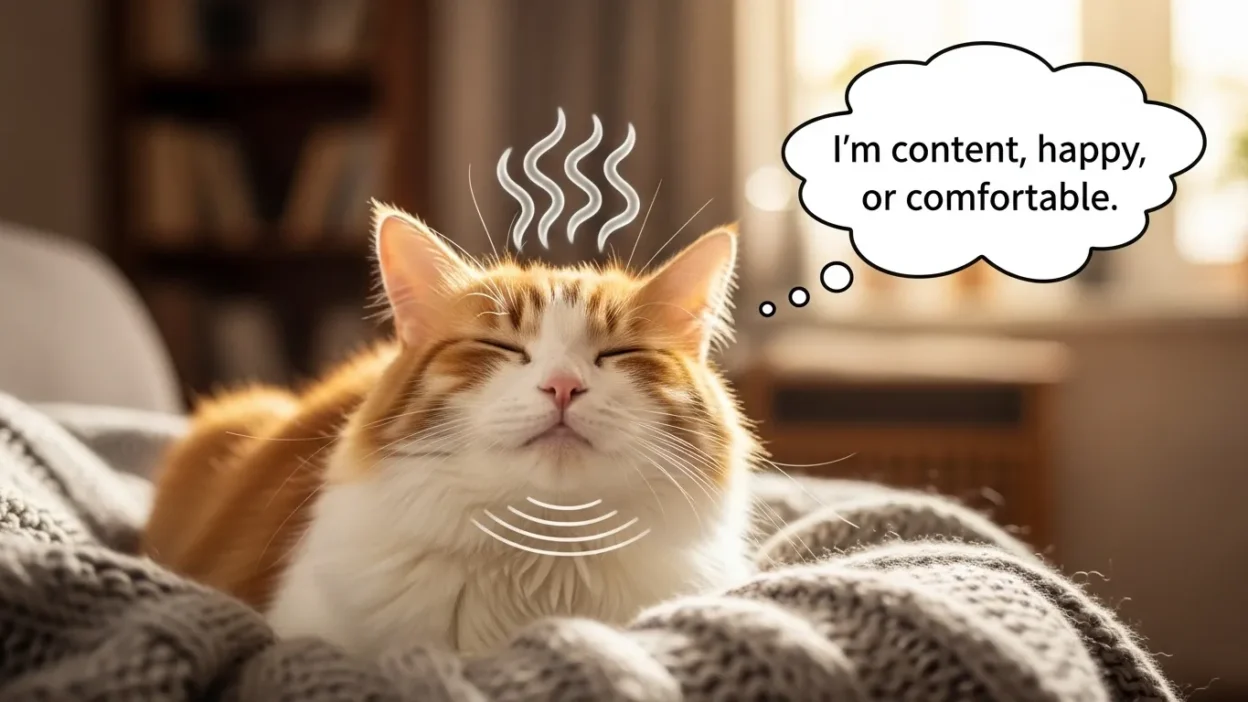
Almost every cat owner has experienced this moment. Your cat curls up next to you, starts vibrating softly, and that familiar gentle sound begins. Purring is one of the most comforting and mysterious behaviors cats have. Many people assume it always means a cat is happy, but the truth is more complex. Cats purr in different situations, and not all of them are about pleasure.
Understanding what it means when a cat purrs helps you read your cat’s emotions better. Sometimes purring shows love and comfort, while other times it can signal stress, pain, or a need for reassurance. Cats use purring as a form of communication with humans and with themselves. In this article, you will learn the real meaning behind cat purring, when it is a good sign, when it might be a warning, and how to understand the context correctly.
Meaning of Cat Purring
When a cat purrs, it usually means the cat is communicating a feeling or need, such as comfort, contentment, stress relief, or even self-healing.
Meaning Table
| Situation | What Purring Means |
|---|---|
| Relaxing or cuddling | Comfort and happiness |
| Being petted | Enjoyment and trust |
| Feeling scared | Self-soothing |
| In pain or sick | Healing or calming response |
| Nursing kittens | Bonding and reassurance |
Why Do Cats Purr
Cats purr for several reasons, and happiness is only one of them. Purring is created by rhythmic muscle movements in the cat’s throat combined with breathing. This sound can happen when cats inhale and exhale.
Purring is a natural behavior that starts when cats are just a few days old. Kittens purr while nursing to communicate with their mother, and the mother purrs back to comfort them. This early bonding behavior continues throughout a cat’s life.
Purring as a Sign of Happiness
The most common reason cats purr is contentment. When a cat is relaxed, warm, and feels safe, purring often follows. You may notice this when your cat is lying on your lap, sleeping beside you, or enjoying gentle petting.
In these situations, purring is usually paired with relaxed body language. The cat’s eyes may be half-closed, ears forward, and tail still. This type of purring is a positive sign that your cat feels secure and comfortable.
Purring as a Way to Communicate
Cats also use purring to communicate with humans. Some cats develop a specific type of purr when they want food or attention. This purr may sound louder or more urgent than a relaxed purr.
This behavior shows that cats can adapt their purring to get a response from people. It is their way of saying they need something, whether it is food, affection, or reassurance.
Purring When a Cat Is Stressed or Afraid
Surprisingly, cats may purr when they are scared, anxious, or stressed. A cat visiting the vet or hiding during a storm might purr even though the situation is uncomfortable.
In these cases, purring acts as a self-soothing mechanism. The vibration helps calm the nervous system and reduce stress. The body uses purring to maintain emotional balance in difficult situations.
Purring and Pain or Illness
Cats sometimes purr when they are injured or not feeling well. This can confuse owners because the sound seems positive. However, purring may help cats cope with pain.
Research suggests that the frequency of purring vibrations may promote healing. These vibrations can help with bone strength, tissue repair, and pain relief. This is one reason cats may purr while recovering from illness or injury.
Purring and Healing
Purring is believed to have physical benefits. The vibrations occur at a frequency that may help improve circulation, reduce inflammation, and support muscle and bone health.
This healing effect may explain why cats recover quickly from injuries and why they purr during rest. Purring helps the body conserve energy while supporting recovery.
Mother Cats and Purring
Mother cats purr while nursing their kittens. This sound helps kittens feel safe and guided, especially since newborn kittens are blind and deaf.
Kittens purr back to signal that they are okay and feeding properly. This mutual purring strengthens the bond between mother and kittens.
How to Tell What Your Cat’s Purr Means
To understand a cat’s purr, context is important. Look at body language, surroundings, and behavior. A relaxed cat with soft eyes and loose posture is likely purring out of happiness. A tense cat with flattened ears or hiding behavior may be purring due to stress.
Observing patterns over time helps you learn what purring usually means for your specific cat.
When Purring Might Be a Warning Sign
If your cat is purring constantly but acting differently, such as eating less, hiding, or moving strangely, it could signal a health issue. Purring should not be used alone to judge a cat’s well-being.
Any sudden change in behavior combined with excessive purring should be checked by a veterinarian.
FAQs
Does purring always mean a cat is happy?
No, cats can purr when they are stressed, scared, or in pain as a way to comfort themselves.
Can cats control their purring?
Yes, cats can start and stop purring depending on their needs and emotions.
Why does my cat purr loudly around me?
Loud purring often shows strong bonding, trust, or a request for attention or food.
Do all cats purr?
Most domestic cats purr, but some big cats and certain breeds purr differently or not at all.
Is purring good for cats?
Yes, purring may help cats relax, heal, and manage stress and pain.
Conclusion
When a cat purrs, it is communicating more than just happiness. Purring can mean comfort, trust, stress relief, pain management, or a request for attention. Understanding the context and body language helps reveal what your cat is really feeling.
Purring is one of the most fascinating and complex behaviors in cats, showing how deeply they connect with their environment and the people they trust. Listening closely to your cat’s purr can strengthen your bond and help you care for them better.
See Also More :
- What Does GDP Stand For? Definition, Formula, and Examples (2026)
- What Does Renewed Mean on Amazon? Is It Worth Buying? (2026)