
Quick Answer: Gonorrhea is a sexually transmitted infection that may cause discharge, burning during urination, or swelling, but in many cases it shows no visible symptoms at all.
You are scrolling online, maybe reading a health forum or a social post, and suddenly you see someone ask, “what does gonorrhea look like?” That question can stop anyone for a second.
It sounds serious, a little scary, and confusing at the same time. Many people assume sexually transmitted infections always have obvious signs, but the truth is not always that simple.
Gonorrhea can look different from person to person, and sometimes it does not look like anything at all.
What Does Gonorrhea Look Like?
Gonorrhea is a bacterial infection caused by Neisseria gonorrhoeae. What it looks like depends on where the infection is in the body and whether the person is male or female.
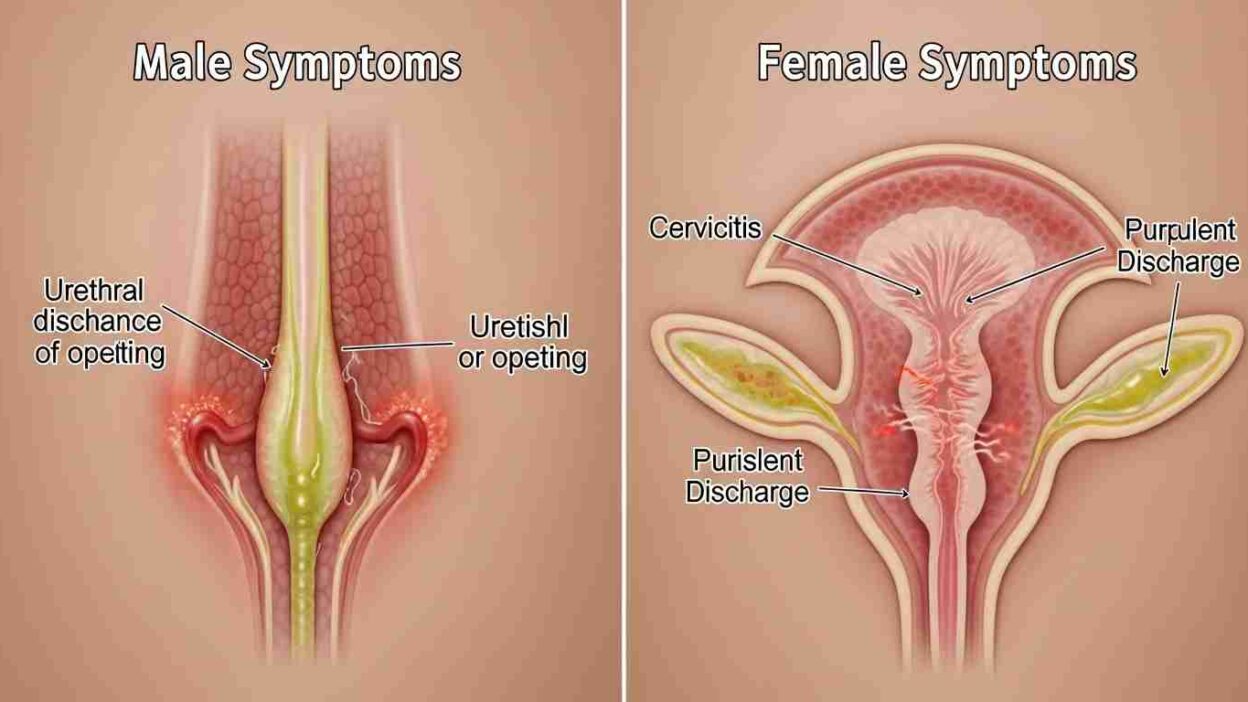
In people with visible symptoms, gonorrhea may appear as unusual discharge from the penis or vagina, redness around the opening of the genitals, or swelling and irritation. The discharge can be white, yellow, or greenish and may have a thick texture. Some people also notice sores or irritation, although gonorrhea itself usually does not cause classic open sores.
Example:
Someone might say, “I noticed a yellow discharge and burning when I pee, so I went to the doctor and found out it was gonorrhea.”
In short: Gonorrhea = a bacterial STI that may cause discharge, pain, or swelling, but can also be completely silent.
Common Signs and Symptoms of Gonorrhea
Gonorrhea does not always show the same signs in everyone. Below are the most common ways it can appear.
In Men
- Thick white, yellow, or green discharge from the penis
- Burning or pain during urination
- Swollen or painful testicles
- Redness or irritation at the tip of the penis
In Women
- Increased vaginal discharge
- Discharge that looks yellow or green
- Pain or burning during urination
- Pelvic or lower abdominal pain
- Bleeding between periods
In the Throat
- Sore throat
- Redness
- Mild pain or no symptoms at all
In the Rectum
- Anal itching
- Discharge
- Pain or discomfort
- Bleeding in some cases
Meaning Table: How Gonorrhea Can Appear in Different Areas
| Body Area | What It May Look Like | How It Feels |
|---|---|---|
| Penis | Yellow or green discharge | Burning or itching |
| Vagina | Unusual discharge | Pelvic discomfort |
| Throat | Red or irritated | Often painless |
| Rectum | Discharge or redness | Itching or soreness |
| Eyes | Redness and swelling | Pain and discharge |
Where Is Gonorrhea Commonly Found?
Gonorrhea can infect multiple parts of the body, not just the genitals. It spreads through sexual contact, including oral and anal sex.
Common places include:
- Genitals
- Throat
- Rectum
- Eyes, though this is rare
This infection is considered casual in conversation online but medically serious in real life. It is not something to joke about or ignore, especially on social media where misinformation spreads easily.
Examples of Gonorrhea in Real Life Conversations
A: I have this weird discharge and it burns when I pee
B: you should get tested, that sounds like gonorrhea
A: my throat hurts but I have no cold
B: oral STIs like gonorrhea can cause that
A: I feel fine but my partner tested positive
B: gonorrhea can be asymptomatic, get checked
A: something feels off down there
B: better safe than sorry, see a doctor
A: is gonorrhea always obvious
B: nope, a lot of people do not notice anything
When Symptoms Appear and When They Do Not
When Gonorrhea Shows Symptoms
- A few days after exposure
- When the infection is active and untreated
- When the immune system reacts strongly
When Gonorrhea Does Not Show Symptoms
- Very common in women
- Early stages of infection
- Throat or rectal infections
Comparison Table
| Context | What Happens | Why It Matters |
|---|---|---|
| Early Infection | No visible signs | Easy to spread unknowingly |
| Active Infection | Discharge and pain | Signals need for treatment |
| Untreated Long Term | Worsening symptoms | Risk of complications |
Why Gonorrhea Can Be Hard to Notice
One of the biggest problems with gonorrhea is that many people assume no symptoms means no infection. This is false. The bacteria can stay in the body quietly and still cause damage over time.
Untreated gonorrhea can lead to:
- Infertility
- Chronic pelvic pain
- Increased risk of other infections
- Complications during pregnancy
That is why regular testing is important, especially for sexually active people.
How Doctors Identify Gonorrhea
Doctors do not diagnose gonorrhea by looks alone. Testing is required.
Common tests include:
- Urine tests
- Swabs from the genitals, throat, or rectum
- Laboratory analysis
Visual symptoms help guide testing, but confirmation always comes from medical tests.
Similar Infections That Look Like Gonorrhea
| Infection | Similar Signs | When It Is Confused |
|---|---|---|
| Chlamydia | Discharge and burning | Very common confusion |
| Yeast Infection | Discharge and irritation | Mostly in women |
| Urinary Tract Infection | Painful urination | No discharge usually |
| Trichomoniasis | Greenish discharge | Similar texture |
Treatment and Outlook
Gonorrhea is treatable with antibiotics. Early treatment usually clears the infection completely. However, antibiotic resistance is increasing, so following medical advice is essential.
After treatment:
- Symptoms usually improve within days
- Sexual partners should also be tested
- Follow up testing may be recommended
Ignoring treatment can lead to serious long term health problems.
FAQs
What does gonorrhea look like in men?
It often looks like yellow or green discharge from the penis with burning during urination.
What does gonorrhea look like in women?
It may cause unusual vaginal discharge, pelvic pain, or no symptoms at all.
Can gonorrhea look like nothing?
Yes, many people have gonorrhea with no visible signs or symptoms.
Does gonorrhea cause sores?
Usually no, gonorrhea causes discharge and irritation rather than open sores.
How soon do symptoms appear?
Symptoms can appear within two to seven days, but sometimes they never appear.
Conclusion
So, what does gonorrhea look like? The honest answer is that it can look very different from person to person, and sometimes it does not look like anything at all.
When symptoms are present, they often include unusual discharge, burning sensations, or swelling. The real danger lies in the silent cases where people feel fine but the infection is still active.
Awareness, regular testing, and early treatment are the best ways to protect yourself and others. If something feels off, trusting your instincts and seeing a healthcare professional can make all the difference.