Quick Answer:
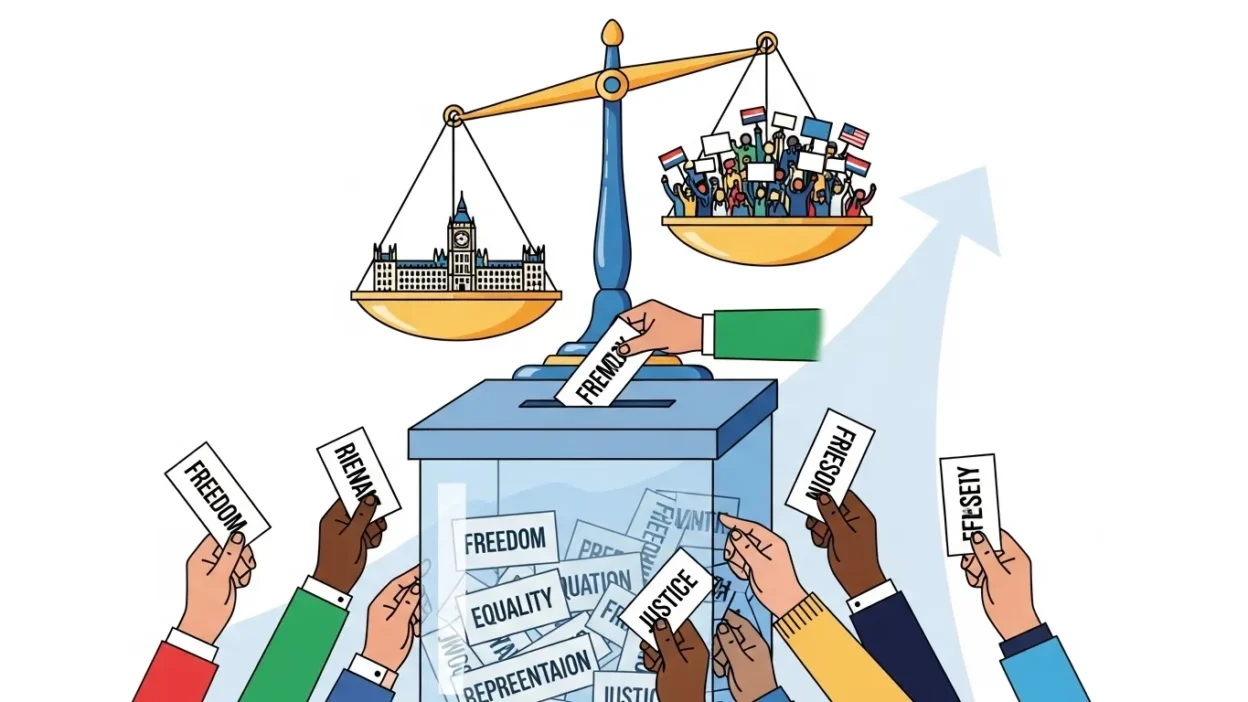
Democracy means a system of government where power belongs to the people. It is a formal and political concept that focuses on voting, representation, and public participation in decision making.
You might have heard the word democracy in school, on the news, or during elections, but many people still pause and think, what does democracy really mean? Sometimes it feels like a big political word that everyone uses but not everyone fully understands.
You may even see it mentioned casually online, in posts or comments, where people argue about freedom, voting, or government power. That can make the meaning feel confusing or overwhelming. Understanding democracy does not have to be complicated.
Once you break it down, it becomes a simple and powerful idea about how people choose their leaders and shape their society.
What Does Democracy Mean in Simple Terms?
Democracy comes from Greek words that mean rule by the people. In a democracy, citizens have the right to choose their leaders, usually through elections. The government exists to serve the people, not control them.
In simple words, democracy means
The people have a voice
The people vote
The people can speak freely
The leaders are accountable
Example sentence:
“In a democracy, citizens vote to choose their government leaders.”
In short:
Democracy = power of the people = government chosen by citizens
Where Is Democracy Commonly Used?
The word democracy is mostly used in formal and educational contexts, but it also appears in everyday conversations.
Common places you will hear or see it
• News and media 📰
• School and college textbooks 📚
• Political speeches 🎤
• Social media debates 💬
• Government discussions 🏛️
Tone:
Formal
Educational
Political
Not casual or flirty
Democracy is not slang and should not be used jokingly in serious conversations.
How Democracy Works in Real Life
In a democratic system, people participate directly or indirectly in governing their country.
Key features include
Free and fair elections
Multiple political parties
Freedom of speech
Freedom of religion
Equal rights under the law
Citizens can criticize leaders without fear, vote them out, and demand change.
Meaning Table of Democracy
| Aspect | Meaning | Why It Matters |
|---|---|---|
| Voting | People choose leaders | Gives citizens power |
| Elections | Regular and fair | Prevents abuse of power |
| Rights | Freedom of speech and belief | Protects individuals |
| Law | Equal for everyone | Ensures fairness |
| Representation | Leaders speak for people | Connects government to citizens |
Examples of Democracy in Everyday Conversation
A: why do people vote every few years
B: that is how democracy works
A: can citizens criticize the government
B: yes, democracy allows free speech
A: why is voting important
B: because democracy depends on people participating
A: what happens if leaders fail
B: in a democracy, they can be voted out
A: why do people protest
B: it is part of democratic rights
When Democracy Is Used and When It Is Not
When to Use Democracy ✅
• Political discussions
• Academic writing
• News reporting
• Explaining government systems
• Civic education
When Not to Use Democracy ❌
• Casual jokes
• Text slang
• Informal chats
• Flirty messages
• Entertainment captions
Comparison Table
| Context | Example Phrase | Why It Works |
|---|---|---|
| School essay | democracy gives citizens rights | Educational |
| News article | democracy is under threat | Informative |
| Casual chat | people choose leaders | Simpler wording |
| Work email | democratic process | Professional tone |
Types of Democracy
There are different forms of democracy used around the world.
Common types include
Direct democracy where people vote on laws directly
Representative democracy where people elect leaders
Constitutional democracy where laws limit government power
Most modern countries use representative democracy.
Democracy vs Other Systems
| System | Who Has Power | Key Difference |
|---|---|---|
| Democracy | The people | Citizens vote |
| Monarchy | A king or queen | Power is inherited |
| Dictatorship | One leader | No public choice |
| Oligarchy | Small group | Limited participation |
| Theocracy | Religious leaders | Religion controls law |
Why Democracy Is Important
Democracy allows people to
Have a voice
Protect their rights
Change leadership peacefully
Hold leaders accountable
Participate in shaping the future
While it is not perfect, democracy gives people control over their government.
Challenges of Democracy
Democracy can face problems such as
Low voter turnout
Political division
Misinformation
Corruption
Slow decision making
Even with challenges, many believe democracy is the fairest system available.
FAQs
What does democracy mean in simple words?
Democracy means people choose their leaders and have a voice in government decisions.
Is democracy the same everywhere?
No, different countries practice democracy in different ways.
Why is voting important in democracy?
Voting allows citizens to choose leaders and influence government actions.
Can democracy exist without elections?
No, elections are a core part of democratic systems.
Is democracy better than other systems?
Many believe it is because it gives people rights and representation.
Conclusion
Democracy is more than just a political word. It is a system built on the idea that power belongs to the people. Through voting, free speech, and equal rights, democracy allows citizens to shape their society and hold leaders accountable.
While it has challenges, democracy remains one of the most important concepts in modern governance.
Understanding what democracy means helps people become informed, responsible, and active participants in their communities.