You might have seen CoQ10 on a supplement bottle, in a pharmacy aisle, or mentioned by someone who “swears by it” for energy and heart health. At first, it sounds like just another vitamin. But it isn’t a vitamin at all it’s something your body already makes. Many people only discover it after feeling tired all the time, starting cholesterol medication, or looking for ways to support their heart.
CoQ10 works quietly inside your cells, helping turn food into energy. As we age, its levels naturally drop, which is why supplements have become popular.
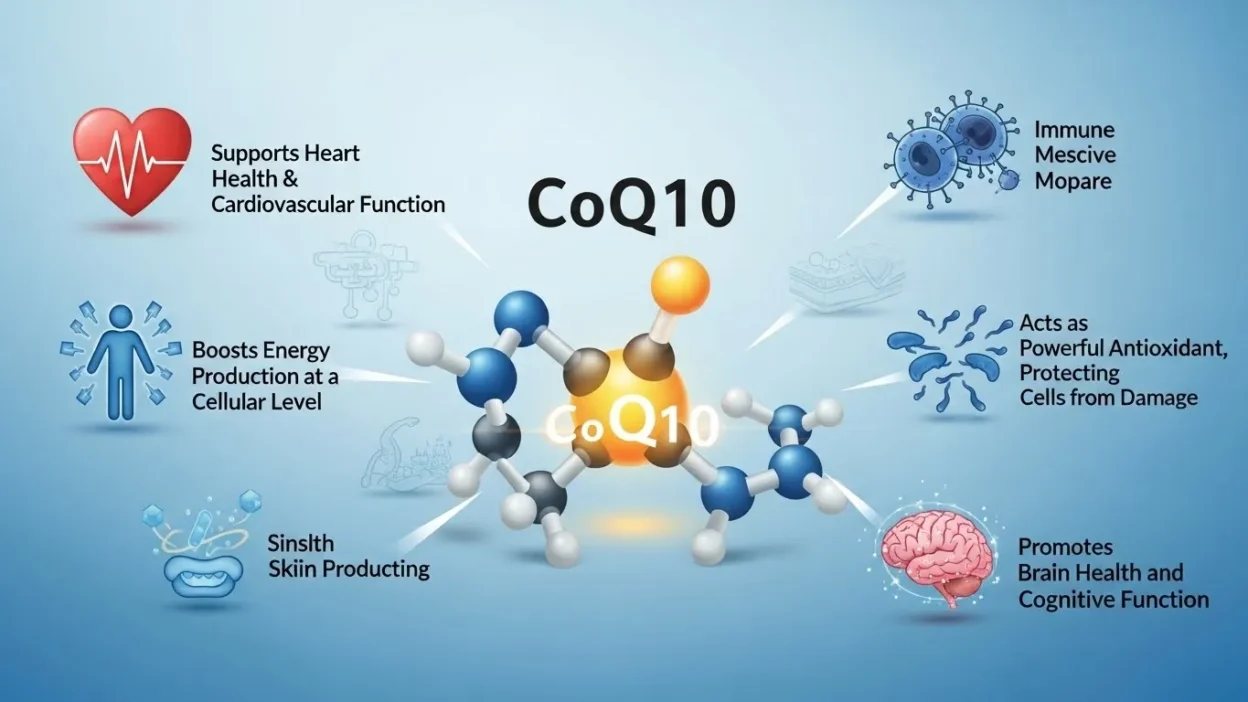
CoQ10 stands for Coenzyme Q10. It helps your cells produce energy, supports heart health, and acts as an antioxidant that protects your body from damage.
🧠 What Does CoQ10 Do in the Body?
It lives inside nearly every cell. Its main job is to help mitochondria the “power plants” of your cells create energy. Without enough CoQ10, cells struggle to function at their best.
In simple terms, CoQ10:
- Helps convert food into usable energy
- Powers muscles and organs, especially the heart
- Protects cells from oxidative damage
- Supports overall vitality
In short:
CoQ10 = Coenzyme Q10 = Cellular energy helper and antioxidant
Meaning Table
| Term | Meaning | Simple Explanation |
|---|---|---|
| CoQ10 | Coenzyme Q10 | Natural compound in the body |
| Coenzyme | Helper molecule | Aids chemical reactions |
| Mitochondria | Cell power centers | Make energy |
| Antioxidant | Protective agent | Fights cell damage |
| Energy | ATP production | Powers the body |
❤️ How CoQ10 Supports Heart Health
The heart uses more energy than almost any other organ. Because of that, it contains very high levels of CoQ10. When levels drop, the heart can feel the impact.
Research and clinical use show that CoQ10 can:
- Support healthy blood pressure
- Improve heart muscle performance
- Help people with heart failure feel less fatigued
- Reduce oxidative stress in heart tissue
Many doctors recommend CoQ10 to people with heart conditions because it helps the heart work more efficiently.
⚡ CoQ10 and Energy Levels
If you often feel drained, sluggish, or mentally foggy, low CoQ10 may play a role. Since it helps cells create energy, lower levels can mean:
- Faster fatigue
- Poor exercise tolerance
- Slower recovery
- Low stamina
People who take CoQ10 often report:
- Better daily energy
- Improved workout endurance
- Less afternoon crash
- Clearer focus
This is why athletes and busy professionals frequently use it.
🛡️ CoQ10 as an Antioxidant
It protects your cells from free radicals unstable molecules that damage tissues and speed aging. This protection:
- Slows cellular wear
- Supports skin health
- Reduces inflammation
- Helps maintain organ function
Antioxidant support is especially important for:
- Aging adults
- People under stress
- Those exposed to pollution
- Individuals with chronic illness
🧬 CoQ10 and Aging
Natural CoQ10 levels decline after age 30. By 60, levels may be significantly lower. This contributes to:
- Lower energy
- Slower metabolism
- Reduced heart efficiency
- Faster cellular aging
Supplementing CoQ10 may help:
- Maintain vitality
- Support healthy aging
- Improve physical performance
- Protect long-term health
It doesn’t stop aging, but it helps your cells age better.
💊 Who Commonly Uses CoQ10?
It is often used by:
- Adults over 40
- People with heart conditions
- Individuals on statin medications
- Athletes
- People with chronic fatigue
- Those focused on anti-aging
Statins reduce natural CoQ10 levels, which is why many doctors advise taking it alongside them.
🔄 Natural Sources vs Supplements
Your body makes it, and you also get small amounts from food.
Foods containing it include:
- Fatty fish
- Beef
- Chicken
- Spinach
- Broccoli
- Nuts
- Whole grains
However, food provides limited amounts. Supplements deliver higher, consistent doses for therapeutic benefits.
🧭 How Long Does CoQ10 Take to Work?
It is fat soluble, so it builds up gradually. Most people notice effects within:
- 2–4 weeks for energy
- 4–8 weeks for heart support
- 8–12 weeks for full benefits
Taking it with meals improves absorption.
🏁 Conclusion
CoQ10 is a powerful compound your body relies on for energy, heart performance, and cellular protection.
It helps turn food into fuel, keeps your heart working efficiently, and shields your cells from damage. As natural levels drop with age or medication use, supplementation can restore balance and improve daily vitality.
In simple terms, it helps your body run stronger, longer, and more efficiently making it one of the most important natural helpers inside you.
See Also More :
- What Does a Bee Sting Look Like? Early Warning Signs Explained
- What Does SMH Stand For? Texting and Online Meaning