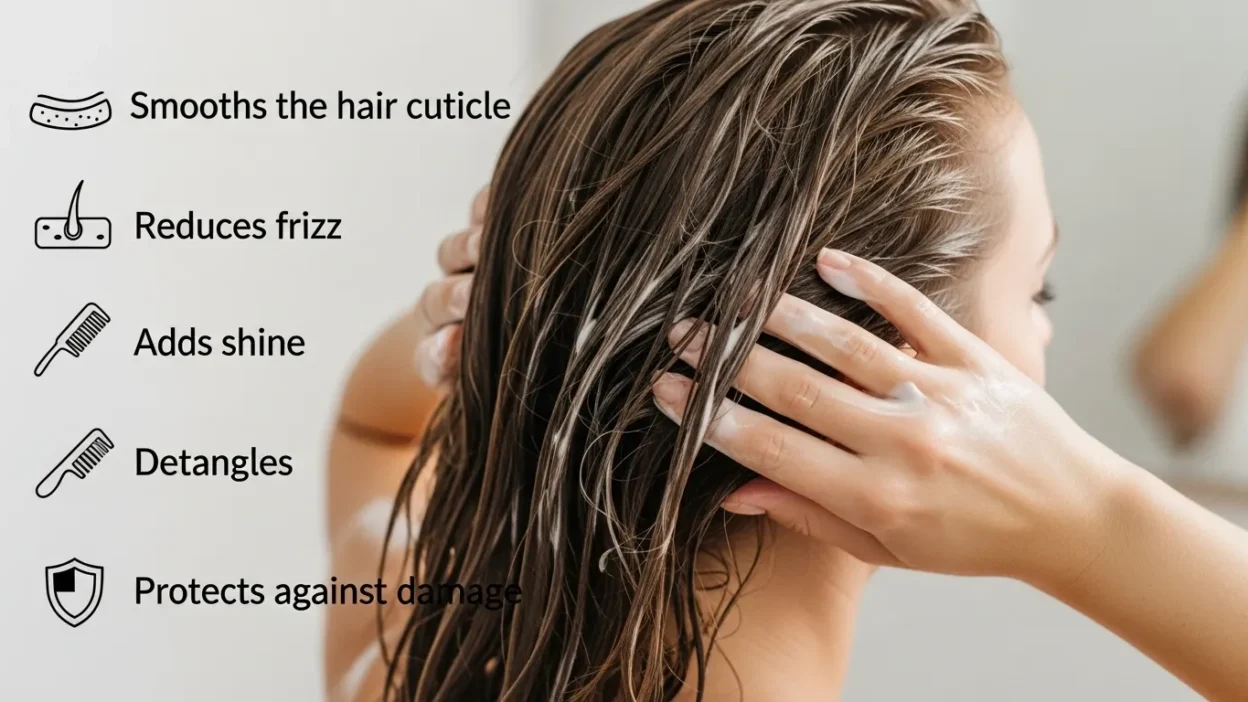
Conditioner is a hair care product that moisturizes, softens, and protects hair after shampooing. It reduces dryness, frizz, and breakage while making hair smoother, shinier, and easier to manage.
You shampoo your hair, rinse it out, and then almost automatically you reach for conditioner. But have you ever stopped and thought, “What does conditioner actually do?” 🤔
A lot of people use conditioner simply because they’ve been told to, not because they truly understand its purpose. Some even skip it, thinking it’s optional or only for people with long hair. Others use it incorrectly and wonder why their hair still feels dry or frizzy.
The truth is, conditioner plays a very important role in hair health. It doesn’t clean your hair that’s shampoo’s job. Instead, it repairs, protects, and restores moisture that shampoo removes.
In this guide, we’ll break down exactly what conditioner does, how it works, when to use it, and how to choose the right one for your hair type simple, clear, and practical.
What Does Conditioner Mean (In Simple Terms)?
Conditioner is a moisturizing and smoothing hair product used after shampooing to improve hair texture and health.
When you shampoo, your hair gets clean but it also loses natural oils. Conditioner steps in to replace lost moisture, seal the hair cuticle, and protect strands from damage.
Simple example:
- Shampoo = cleans the hair 🧼
- Conditioner = heals and protects the hair 🛡️
In short:
Conditioner = moisture + smoothness + protection for your hair
How Does Conditioner Work?
Hair strands have an outer layer called the cuticle. Shampoo opens this cuticle to remove dirt and oil. Conditioner works by:
- Closing the hair cuticle
- Coating hair strands with nourishing ingredients
- Reducing friction between hair fibers
What Conditioner Actually Does Inside Your Hair
- Adds moisture to dry strands
- Makes hair softer and smoother
- Reduces static and frizz
- Strengthens weak or damaged hair
- Improves shine and manageability
Think of conditioner like lotion for your hair without it, hair becomes dry, rough, and brittle.
Why Is Conditioner Important?
Skipping conditioner can lead to long-term hair problems, especially if you shampoo often.
Benefits of Using Conditioner Regularly
- Prevents dryness and split ends
- Makes hair easier to detangle
- Reduces hair breakage
- Improves overall hair appearance
- Protects hair from heat and pollution
If your hair feels:
- Rough 😖
- Frizzy 🌪️
- Dull 😐
…it’s probably asking for conditioner.
Types of Hair Conditioner (And What They Do)
Not all conditioners are the same. Here’s a quick breakdown 👇
Common Conditioner Types
| Conditioner Type | What It Does | Best For |
|---|---|---|
| Rinse-Out Conditioner | Daily moisture and softness | Normal to dry hair |
| Deep Conditioner | Repairs damage deeply | Damaged or colored hair |
| Leave-In Conditioner | Light moisture without rinsing | Curly or frizzy hair |
| Protein Conditioner | Strengthens weak hair | Breakage-prone hair |
| Volumizing Conditioner | Adds body without heaviness | Fine or thin hair |
Where Is Conditioner Commonly Used?
Conditioner is used worldwide in daily hair care routines, especially in:
- 🚿 Showers (after shampoo)
- 💇♀️ Salons and hair treatments
- 🏖️ After swimming (to fix chlorine damage)
- 🔥 Before or after heat styling
Is Conditioner Formal or Casual?
- ✔️ Casual everyday product
- ✔️ Used by all genders
- ✔️ Safe for daily or weekly routines
Examples of Conditioner Use in Real Life
Everyday Situations
- “My hair feels dry I need conditioner.”
- “Conditioner makes my curls softer.”
- “Never skip conditioner after shampoo.”
Hair Care Routine Example
- Shampoo → cleans scalp
- Conditioner → smooths and protects hair
- Hair oil or serum → seals moisture
When to Use and When Not to Use Conditioner
✅ When to Use Conditioner
- After shampooing
- If hair feels dry or rough
- After coloring or heat styling
- If hair tangles easily
❌ When Not to Use Conditioner
- On oily scalp (apply only to ends)
- Before shampoo (unless pre-conditioning)
- Using too much on fine hair
Conditioner vs Shampoo (Quick Comparison)
| Feature | Shampoo | Conditioner |
|---|---|---|
| Main Purpose | Cleans hair | Moisturizes hair |
| Removes Oil | Yes | No |
| Adds Moisture | No | Yes |
| Used First | Yes | No |
| Can Be Skipped | Sometimes | Not recommended |
Common Myths About Conditioner
❌ “Conditioner causes hair fall”
✔️ Truth: It actually reduces breakage
❌ “Men don’t need conditioner”
✔️ Truth: Hair is hair everyone benefits
❌ “Conditioner makes hair greasy”
✔️ Truth: Only if used incorrectly
How to Use Conditioner the Right Way
- Shampoo your hair
- Squeeze out excess water
- Apply conditioner to mid-lengths and ends
- Leave for 1–3 minutes
- Rinse thoroughly
🚫 Avoid applying directly to the scalp unless the product says so.
Meaning Table: What Conditioner Does
| Hair Problem | How Conditioner Helps |
|---|---|
| Dry hair | Restores moisture |
| Frizzy hair | Smooths cuticle |
| Tangled hair | Improves slip |
| Dull hair | Adds shine |
| Damaged hair | Strengthens strands |
FAQs
1. What does conditioner do to your hair?
Conditioner moisturizes, softens, and protects hair after shampooing.
2. Can I use conditioner without shampoo?
Yes, this is called co-washing, but it’s best for curly or dry hair only.
3. How often should I use conditioner?
Most people should use it every time they shampoo.
4. Does conditioner help hair growth?
Indirectly, yes it reduces breakage, helping hair grow longer.
5. Is conditioner necessary?
Yes, especially if you want healthy, smooth, and manageable hair.
Conclusion
So, what does conditioner do?
It restores moisture, smooths hair, reduces damage, and keeps your hair healthy and good-looking. Shampoo cleans but conditioner completes your hair care routine.
If you want softer, shinier, and stronger hair, conditioner isn’t optional it’s essential. Just choose the right type, use it correctly, and your hair will thank you ✨