You may have seen an air purifier in homes, offices, or hospitals and wondered what it actually does. Many people buy one because of allergies, dust, smoke, or bad smells, yet they are not always sure how it works or what benefits it truly provides. At first, it can feel like just another appliance sitting quietly in a corner. However, an air purifier plays a much bigger role in your daily health than most people realize.
Indoor air is often more polluted than outdoor air. Dust, pet hair, pollen, mold spores, bacteria, smoke, and even invisible chemicals float around inside closed rooms. Over time, breathing this air can cause sneezing, headaches, irritation, and long term respiratory issues.
An air purifier helps solve this problem by cleaning the air you breathe. It quietly removes harmful particles and improves overall air quality, making your space healthier and more comfortable.
What Does an Air Purifier Do?
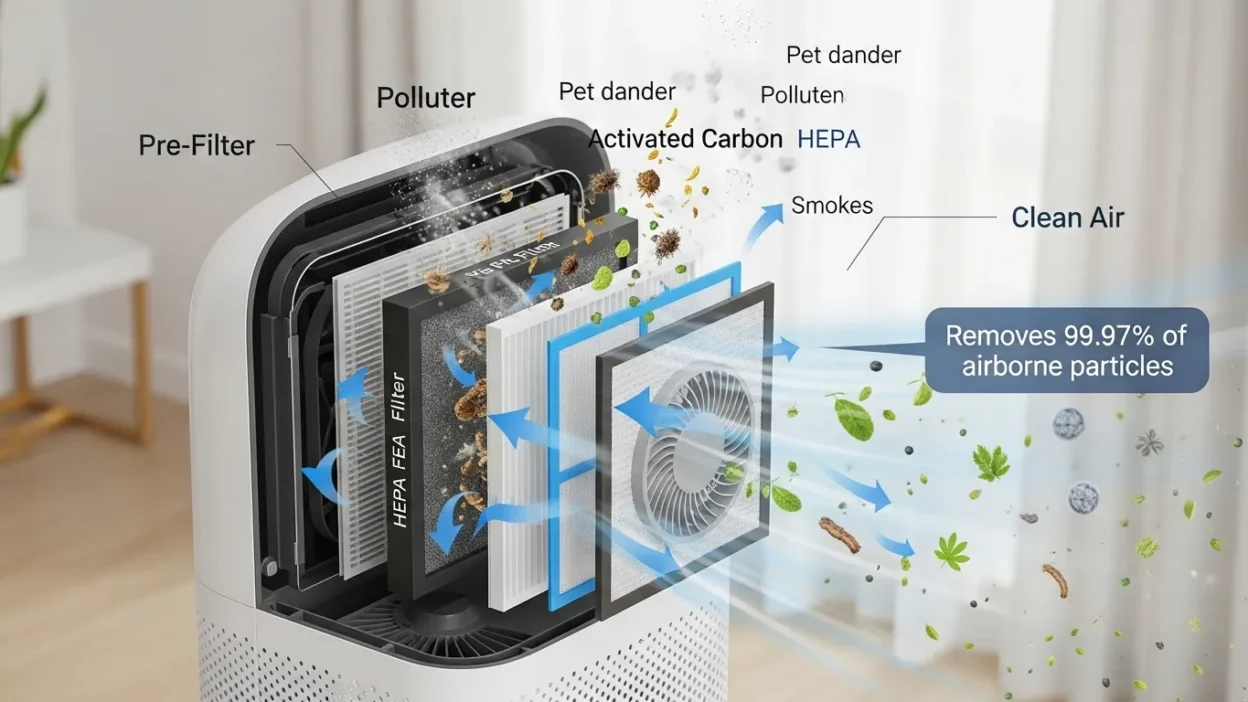
An air purifier is a device designed to filter and clean the air inside a room. It pulls in air, passes it through one or more filters, and releases cleaner air back into the space.
Its main job is to remove harmful particles such as:
Dust and dirt
Pollen and allergens
Pet hair and dander
Smoke particles
Mold spores
Bacteria and viruses
Unpleasant odors
In simple words, an air purifier acts like a lung for your room. It constantly traps unwanted particles so that the air around you becomes fresher and safer to breathe.
How an Air Purifier Works
Most air purifiers use a fan and a system of filters. The process usually happens in three steps.
First, the fan pulls dirty air into the machine.
Next, the air passes through filters that trap particles.
Finally, clean air is released back into the room.
Different models use different technologies. Some rely on HEPA filters, while others include activated carbon, UV light, or ionizers. Each method targets specific types of pollutants.
Types of Filters Used in Air Purifiers
| Filter Type | What It Removes | Best For |
|---|---|---|
| Pre Filter | Large dust and hair | Extending main filter life |
| HEPA Filter | Tiny particles like pollen and smoke | Allergies and asthma |
| Carbon Filter | Odors and gases | Cooking smells and smoke |
| UV Light | Germs and bacteria | Hygiene and health |
| Ionizer | Floating particles | Reducing airborne dust |
A high quality air purifier often combines more than one of these filters to provide complete air cleaning.
Benefits of Using an Air Purifier
Using an air purifier can improve your daily life in many ways.
It reduces allergy symptoms by removing pollen and dust.
It helps asthma sufferers breathe more easily.
It removes smoke from cigarettes or cooking.
It reduces pet odors and fur in the air.
It limits the spread of airborne germs.
It creates a fresher and cleaner environment.
Over time, cleaner air can lead to better sleep, fewer headaches, and improved overall comfort inside your home.
Where Air Purifiers Are Most Useful
Air purifiers work well in many environments.
Bedrooms for better sleep
Living rooms for family comfort
Offices for cleaner workspaces
Hospitals for hygiene
Schools for healthy classrooms
Homes with pets
Homes in polluted cities
They are especially helpful in closed spaces where fresh air circulation is limited.
Air Purifier vs Humidifier
Many people confuse air purifiers with humidifiers. However, they serve different purposes.
| Device | Main Function | Purpose |
|---|---|---|
| Air Purifier | Cleans air | Removes pollutants |
| Humidifier | Adds moisture | Prevents dryness |
An air purifier removes harmful particles. A humidifier adds water vapor to dry air. Some homes benefit from using both.
When You Should Use an Air Purifier
An air purifier becomes especially useful when:
You suffer from allergies
You live in a polluted area
You have pets indoors
Someone smokes inside
You experience frequent dust buildup
You want better sleep quality
Even in clean homes, invisible particles still float in the air. An air purifier continuously removes them before they reach your lungs.
Limitations of Air Purifiers
While helpful, air purifiers are not magic machines.
They cannot replace proper ventilation.
They do not remove all gases instantly.
They need regular filter replacement.
They work best in closed rooms.
Understanding these limits helps you use them effectively without unrealistic expectations.
Conclusion
An air purifier cleans the air inside your home by removing dust, allergens, smoke, germs, and odors. It works by pulling in dirty air, filtering out harmful particles, and releasing cleaner air back into your space. Over time, this process improves breathing, reduces allergies, and creates a healthier environment.
you live in a busy city, own pets, or simply want fresher indoor air, an air purifier can make a noticeable difference. It does not replace fresh air or proper cleaning, yet it adds an important layer of protection for your lungs. In a world filled with invisible pollutants, an air purifier quietly works to keep every breath safer and cleaner.
See Also More :
- What Does Sustained Mean in Court? Legal Meaning Explained
- What Does a Data Scientist Do? Roles, Skills, and Career Path